

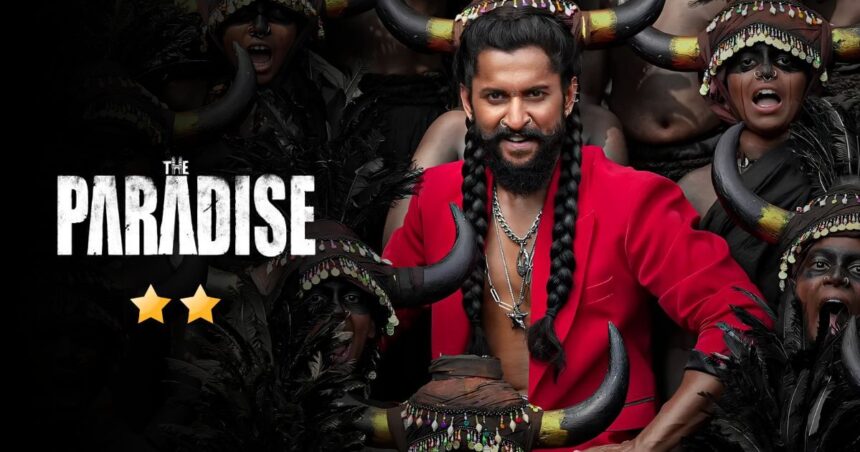

After the success of Dasara, the combination of Nani and director Srikanth Odela created huge expectations. Their first collaboration had a rawness, emotional depth and mass appeal that worked beautifully. Naturally, The Paradise arrives with even bigger expectations. The scale is massive, the world is darker and Nani takes on another intense character. Unfortunately, the film does not have a story strong enough to match its ambition.
Starring Nani, Raghav Juyal, Kayadu Lohar, Sonali Kulkarni and Mohan Babu, The Paradise attempts to tell a violent story about oppression, identity and rebellion. There are moments where it looks spectacular. But as the film progresses, the writing loses control and the violence starts taking over the storytelling.
The Paradise Story
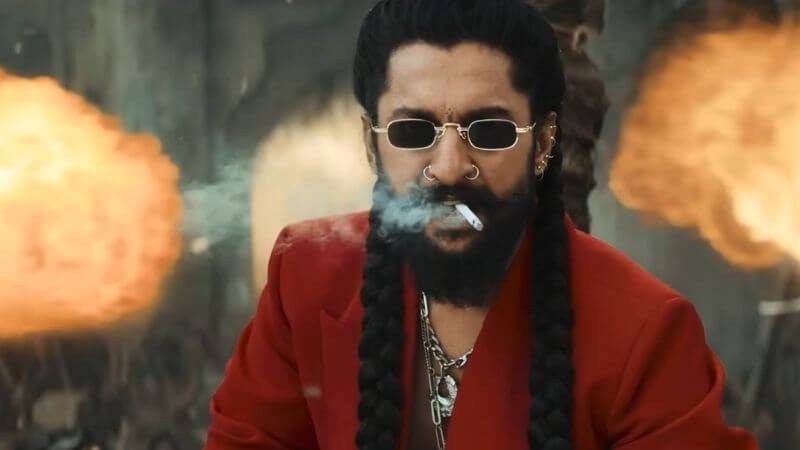
Set in 1980s India, The Paradise revolves around the Savaari community, a marginalised tribe living on the outskirts of Secunderabad. Even years after independence, the community has no proper legal identity, documents or basic rights. They live under the control of Shikanja Malik, a ruthless feudal ruler played by Mohan Babu. For Malik, the Savaaris are not citizens. They are merely people under his control.
Jadal, played by Nani, belongs to this community. His mother Shamakka, played by Sonali Kulkarni, is among the few people willing to challenge the system. Jadal, meanwhile, has spent years in prison. When he returns, he carries years of anger with him.
More From CineTales



His return changes the equation within the community. Jadal is no longer interested in simply surviving under Malik’s rule. He wants to fight back. His journey becomes a battle for recognition, freedom and dignity.
Raghav Juyal plays Vikram Malik, while Kayadu Lohar is also part of this dangerous world. The film revolves around Jadal’s transformation from someone surviving within the existing system into someone ready to destroy it.
The basic premise is promising. A community without an identity fighting against a powerful feudal system could have made for a powerful political and emotional drama. Unfortunately, The Paradise eventually becomes more interested in violence and spectacle than in fully exploring these ideas.
The Paradise Movie Review
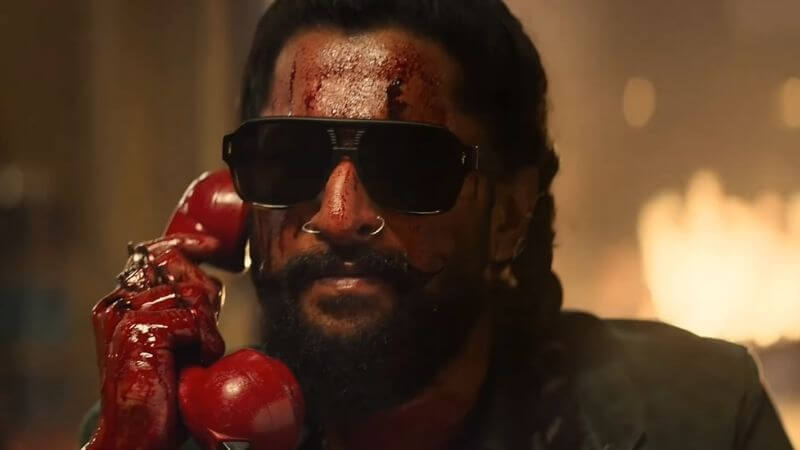
The first half is easily the stronger portion of The Paradise. Srikanth Odela creates a distinctive world from the opening scenes. The atmosphere is dark, raw and unsettling. The Savaari community feels different from the usual worlds we see in commercial Telugu cinema. There is a certain unpredictability to the presentation, and initially, you want to see where the story is heading.
The opening portions also establish that this is not another regular Nani film. The actor has undergone a significant transformation, and the character’s physical appearance immediately grabs attention. The world around him is equally striking. But once the film moves towards its central conflict, the screenplay begins to lose focus.
The film is divided into seven chapters, each carrying a powerful title. On paper, this sounds interesting. In execution, however, the chapter structure does not add much to the storytelling. It sometimes feels like a stylistic decision rather than something that genuinely helps the narrative.
The second half is where The Paradise starts falling apart. The screenplay becomes increasingly chaotic. The story keeps moving from one violent sequence to another, but the emotional stakes do not grow at the same pace. Instead of building towards a strong dramatic payoff, the film keeps escalating the brutality. And this becomes a major problem.
There is nothing wrong with a violent film when the violence serves the story. Here, however, the excessive gore often feels like the point itself. After a while, the bloodshed stops creating an impact. It becomes repetitive. The film had a much more interesting story buried underneath all that violence, but the screenplay does not give it enough space.
The emotional relationship between Jadal and his mother could have provided the film with a stronger heart. The larger struggle of the Savaari community also had enough potential to make the story genuinely moving. Unfortunately, these aspects are frequently pushed aside for larger and louder sequences.
The biggest disappointment is that the film’s ambition never translates into a consistently engaging narrative. Srikanth Odela clearly has a visual imagination. Some sequences are staged with tremendous scale. But style cannot compensate for a screenplay that starts losing direction.
Music And Technical Aspects
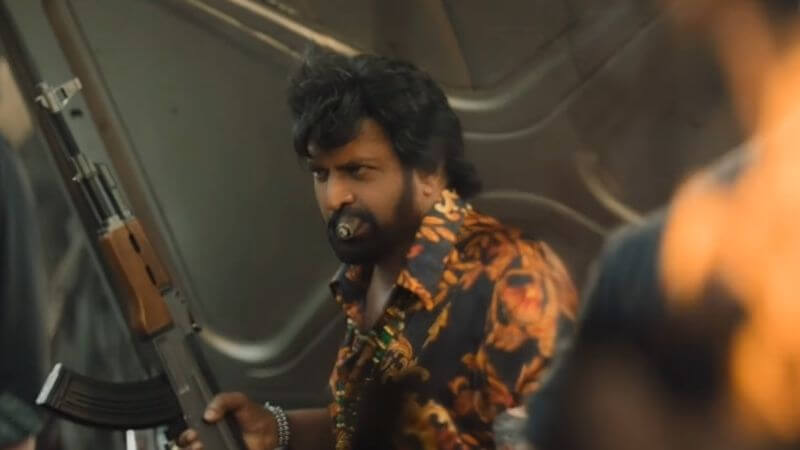
Technically, The Paradise is a mixed bag. The production design is one of the film’s biggest strengths. The world feels detailed, lived-in and visually distinctive. The cinematography also gives the film a strong identity, particularly in its darker and more atmospheric portions. The action staging has scale and impact in several sequences.
However, the editing needed to be much sharper. At 2 hours and 54 minutes, the film feels considerably longer than it should. Several portions could have been trimmed without losing anything important.
The VFX also leave something to be desired. Considering the scale of the film, some visual effects do not look as polished as expected.
Anirudh Ravichander’s songs work reasonably well within the film, but his background score does not have the impact one expects from a project of this scale. The score occasionally complements the mood, but it rarely elevates a scene to another level.
The Paradise Performances
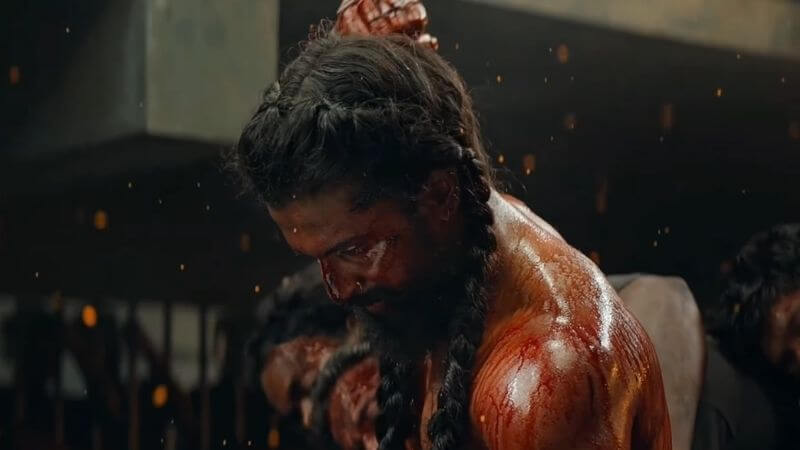
Nani deserves credit for completely committing to Jadal. The actor has clearly worked on his physical appearance, hairstyle and body language. He looks and behaves differently from his usual screen persona. The action portions also show considerable physical commitment.
But the character itself does not give him enough emotional material to work with. Nani tries to bring intensity to Jadal, and there are moments where his performance genuinely connects. Still, the screenplay keeps reducing the character to anger and violence.
Raghav Juyal makes his Telugu debut as Vikram Malik. His physical presence is interesting, but the character is surprisingly underwritten. There is very little progression or complexity to Vikram, which makes the casting feel like a missed opportunity.
Mohan Babu plays Shikanja Malik with authority, but again, the writing does not give him enough layers. The character is positioned as a powerful antagonist, yet he never becomes as threatening as the story demands.
Sonali Kulkarni brings sincerity to Shamakka. The mother sentiment is handled with conviction, although the character sometimes feels more like a narrative device than a fully developed person.
Kayadu Lohar adds freshness to the otherwise relentlessly heavy atmosphere. She makes an impression, but her character also deserved greater development.
Final Verdict
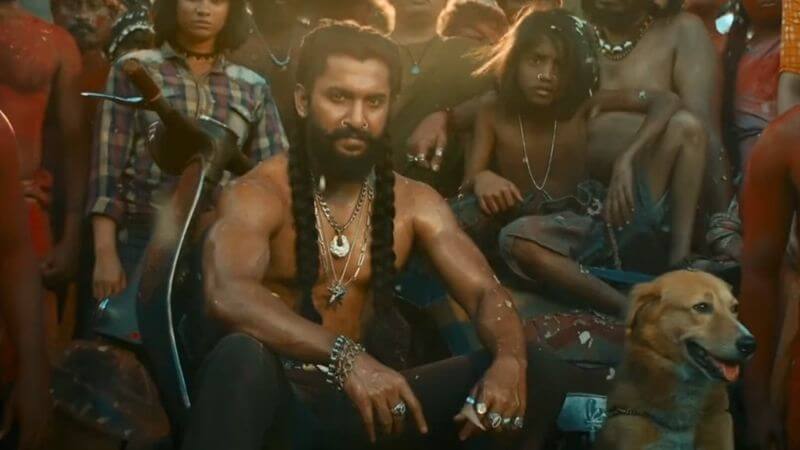
The Paradise had almost everything going for it on paper. Nani and Srikanth Odela returning after Dasara, a massive world, an interesting premise and a visually ambitious presentation. The first half even gives you hope that the film could deliver something special.
Unfortunately, the second half changes the experience completely. The screenplay loses focus, the violence becomes excessive and the emotional core gets buried beneath the spectacle. The 174-minute runtime only makes these problems more noticeable.
Srikanth Odela has ambition and a strong visual voice. Nani is completely committed to the role. The production design and cinematography are impressive. But the film needed a much stronger script to bring all these elements together.
The Paradise begins as a raw and intriguing mass drama but gradually turns into a chaotic and excessively violent experience. There are some impressive moments along the way, but they are not enough to hold the film together. For fans of Nani and Srikanth Odela, there are still a few moments worth watching. But as a complete cinematic experience, The Paradise falls well short of the expectations created by Dasara.
Rating: ⭐⭐ (2/5)
Love honest, hype-free movie reviews? Stay tuned with Cinetales for more deep dives into the latest movies, series, OTT drops, and box office battles — all in one place!
Follow Us: Facebook | Instagram | X |
Youtube | Pinterest | Google News |
Cinetales is on YouTube; click here to subscribe for the latest videos and updates.