

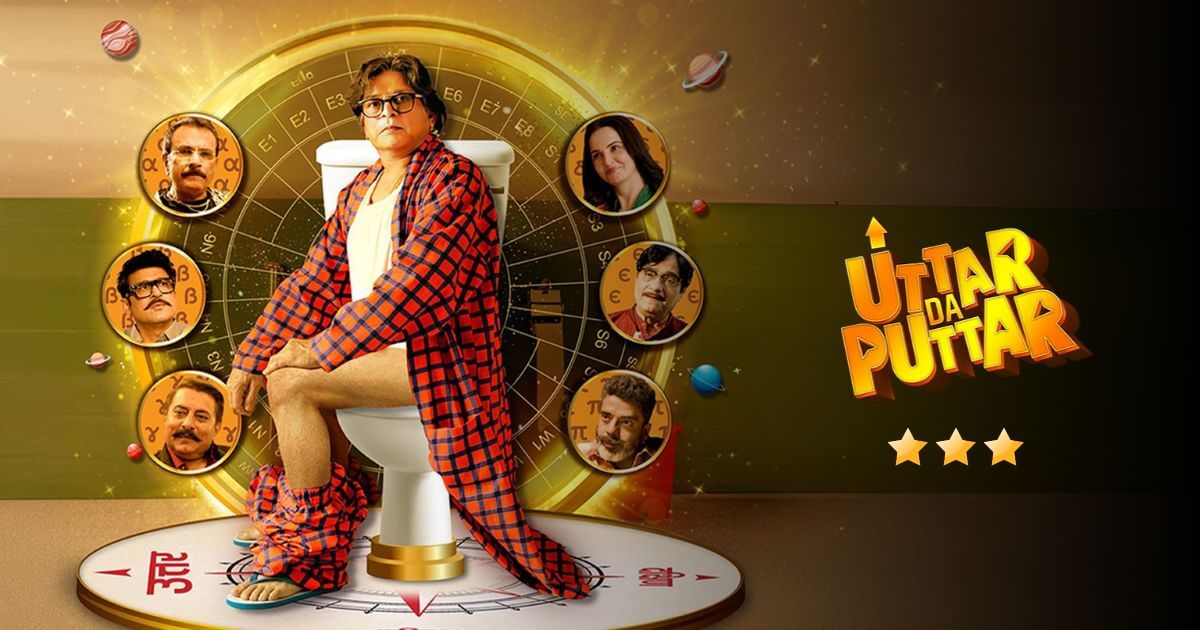

In an era where comedies often rely on loud humor and exaggerated situations, Uttar Da Puttar chooses a simpler route. Director Ravinder Siwach’s debut feature blends comedy with a relatable social theme and wraps it around the popular belief in Vastu Shastra. Instead of mocking faith or blindly promoting it, the film attempts to find a balance between logic, belief, and everyday family life.
Starring Annu Kapoor, Rukhsar Rehman, Brijendra Kala, Pawan Malhotra, Jeeveshu Ahluwalia, Sumit Gulati, Rajendra Sethi, Nitin Arora, Venus Singh, and Ishtiyak Khan, the film keeps its focus on relatable characters and situational comedy. With a runtime of just 1 hour and 43 minutes, Uttar Da Puttar doesn’t overstay its welcome. While it has its share of shortcomings, especially in the music department, it remains a pleasant family entertainer that delivers a few genuine laughs along the way.
Uttar Da Puttar Story
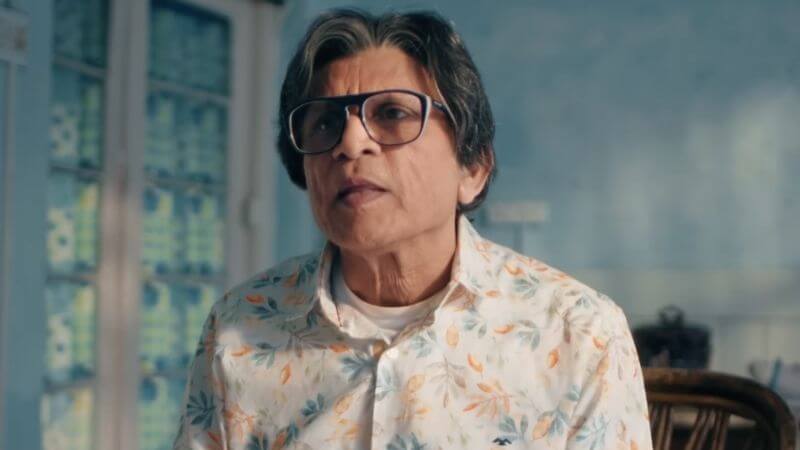
Sai Tuteja (Annu Kapoor) is a physics professor who firmly believes that every problem in life can be solved if one lives in a house built according to the principles of Vastu Shastra. His obsession with finding the perfect Vastu-compliant home slowly begins affecting his family. He even convinces his in-laws that all their troubles will disappear once they move into the right house. Ironically, just when everything appears to be falling into place, an unexpected accident inside the house leaves everyone questioning his beliefs.
More From CineTales



Frustrated by Sai’s constant obsession, his wife Ginni (Rukhsar Rehman) decides to leave him. Determined to win her back, Sai sets out on a mission with his close friend to find the perfect home. Their journey leads them into several amusing situations involving unusual people, bizarre circumstances, and unexpected life lessons. Whether Sai eventually realizes what truly matters forms the heart of this light-hearted comedy.
Uttar Da Puttar Movie Review
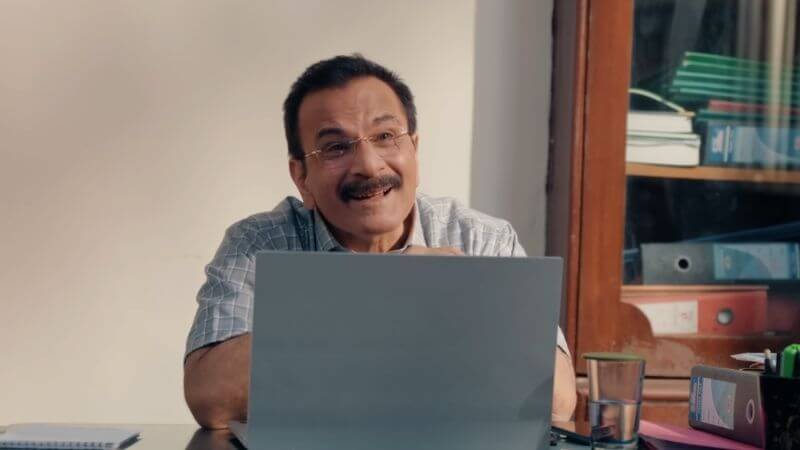
One of the biggest strengths of Uttar Da Puttar is its simplicity. Ravinder Siwach doesn’t try to turn the film into a larger-than-life social drama. Instead, he tells a small, relatable story that many middle-class families can connect with. The film revolves around Vastu Shastra, but thankfully, it never becomes preachy.
Rather than promoting superstition, it presents different viewpoints through comedy and allows audiences to draw their own conclusions. This balanced approach works well and keeps the narrative grounded.
Within the opening minutes, viewers understand Sai’s personality, his obsession with Vastu, and how it begins affecting his relationships. The straightforward storytelling keeps the film moving without unnecessary diversions. The humor also feels organic. The writing by Sandeep Kapoor and Ravinder Siwach remains relatable throughout. The characters feel like people we encounter in everyday life, making it easier to connect with their problems.
Instead of relying on slapstick comedy or forced jokes, most laughs emerge naturally from the situations and the quirky personalities of the characters. This makes the comedy far more enjoyable and family-friendly. Another welcome aspect is the film’s clean treatment.
There are no unnecessary double-meaning dialogues or uncomfortable scenes inserted merely for cheap laughs. It is refreshing to watch a comedy that genuinely caters to audiences of all age groups. The writing deserves appreciation for making an everyday subject entertaining. Most people have encountered discussions about Vastu while buying or building a home. The film smartly builds its comedy around this familiar concept, making the situations feel believable despite their humorous presentation.
However, the film isn’t without flaws. While the central idea remains interesting, the screenplay occasionally becomes repetitive as Sai’s obsession continues without enough variation. A few scenes begin following similar patterns, reducing their comic impact.
The narrative also plays things a little too safely. The film rarely surprises the audience and follows a predictable path from beginning to end. A few stronger emotional moments or unexpected twists could have elevated the overall experience.
Music And Technical Aspects
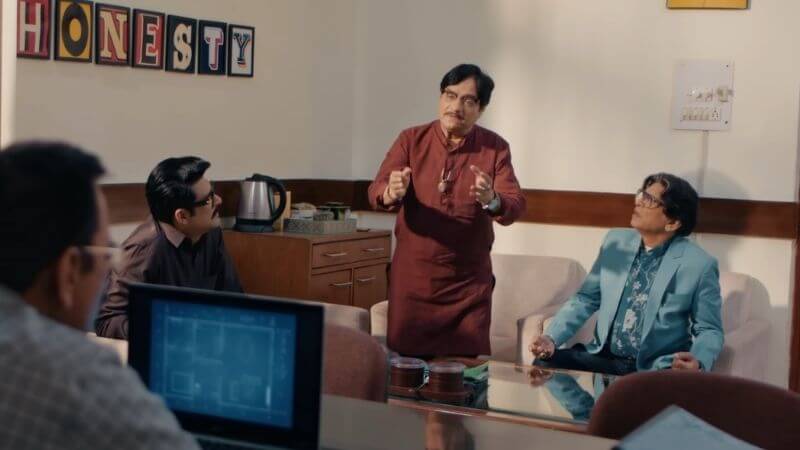
The technical aspects remain simple and effective. Ravinder Siwach deserves credit for making a confident directorial debut. His biggest achievement lies in keeping the film focused without overcomplicating its message. He understands that the story itself is enough to engage viewers and avoids adding unnecessary subplots.
Visually, the film maintains a grounded appearance that suits its subject. The cinematography complements the slice-of-life storytelling without trying to become overly stylish. The editing is another positive. At just 103 minutes, the film maintains a brisk pace and rarely feels stretched.
Music, however, turns out to be the weakest department. None of the songs leave a lasting impression. The background score occasionally becomes louder than necessary and feels slightly exaggerated in certain scenes, reducing the natural charm the film otherwise maintains.
Uttar Da Puttar Performances
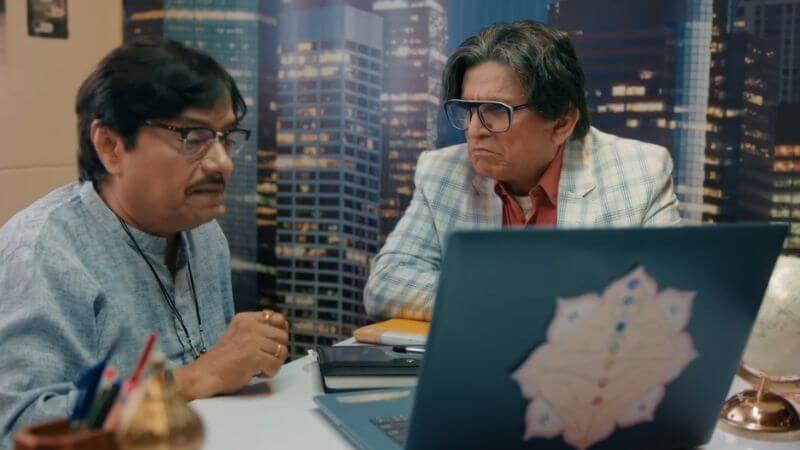
Annu Kapoor once again reminds audiences why he remains one of Indian cinema’s finest character actors. He beautifully balances the contradictions within Sai Tuteja’s personality. Despite playing a physics professor, he convincingly portrays someone deeply influenced by astrology and Vastu beliefs. His comic timing remains effortless, while the emotional moments also land effectively.
The performance brings back memories of his memorable work in Vicky Donor, and Dharam Sankat Mein, although the character here feels completely different.
Brijendra Kala provides excellent support. His chemistry with Annu Kapoor generates several of the film’s funniest moments, and his natural dialogue delivery adds warmth to the narrative. Rukhsar Rehman delivers a sincere performance as Ginni. She brings emotional balance to the story and makes her character’s frustrations believable.
Pawan Malhotra once again proves his versatility. His role as an MCD official injects fresh humor whenever he appears on screen. Jeeveshu Ahluwalia performs confidently, while Sumit Gulati contributes effectively within his limited screen time.
Among the supporting cast, Ishtiyak Khan stands out. Every time he appears, he manages to leave a smile on the audience’s face with his effortless comic presence. Overall, the ensemble cast shares excellent chemistry, making the film consistently engaging.
Final Verdict
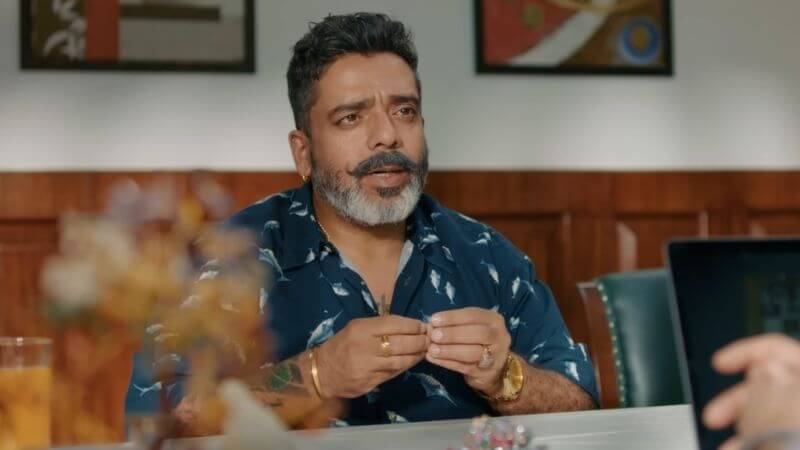
Uttar Da Puttar doesn’t try to reinvent the comedy genre, nor does it pretend to be something bigger than it is. Instead, it tells a simple, relatable story with warmth, humor, and honesty.
While the predictable screenplay and underwhelming music prevent it from becoming a memorable entertainer, the clean family-friendly humor, relatable subject, crisp runtime, and excellent performances make it an enjoyable watch.
Annu Kapoor once again proves why he remains the film’s biggest strength, carrying the narrative with remarkable ease. If you’re looking for a light-hearted family entertainer that offers laughs without relying on loud comedy or unnecessary vulgarity, Uttar Da Puttar is worth your time.
Rating: ⭐⭐⭐ (3/5)
Love honest, hype-free movie reviews? Stay tuned with Cinetales for more deep dives into the latest movies, series, OTT drops, and box office battles — all in one place!
Follow Us: Facebook | Instagram | X |
Youtube | Pinterest | Google News |
Cinetales is on YouTube; click here to subscribe for the latest videos and updates.