




Some films aim to thrill. Some aim to provoke thought. Bihu Attack attempts to do both, while also carrying the weight of regional representation and national responsibility on its shoulders. Set against the cultural and political landscape of Assam, the film uses the festive backdrop of Bihu to tell a story about extremism, inclusion, and the idea of nationhood beyond slogans. Directed by Suzad Iqbal Khan, the film takes a sincere approach to a sensitive subject, even if it occasionally struggles to rise above familiar tropes of the genre. Bihu Attack stars Dev Menaria, Daisy Shah, Arbaaz Khan, Rahul Dev, Raza Murad, Yukti Kapoor, Amiee Misobbah, Hiten Tejwani, and Mir Sarwar.
At its core, Bihu Attack is not just a counter-terrorism thriller. It is also a film that attempts to humanise the Northeast, pushing the idea that cultural identity and national identity are not opposing forces but complementary ones. With a runtime of two hours and ten minutes, the film moves between action, emotion, and ideology, often landing effectively, sometimes unevenly.
Bihu Attack Story
More From CineTales



The story revolves around Raj Kunwar, an army officer from Assam, portrayed by Dev Menaria. Raj is not just a decorated officer. He is also a widower and a single father to his young daughter, Driti. His personal loss shapes his worldview, making him more empathetic and grounded than the typical on-screen soldier. Raj believes that extremism cannot be defeated by bullets alone. Education, dialogue, and social inclusion are equally important tools.
His work involves persuading members of various insurgent groups to surrender and rejoin mainstream society. He speaks their language, understands their grievances, and believes in reform rather than annihilation. This makes him an unusual figure in the system, respected by some and questioned by others.
The narrative takes a sharp turn when intelligence reports suggest that a major terrorist attack is being planned during the Bihu festival. The stakes rise further when it is revealed that the Defence Minister will be present at the event. What was supposed to be a celebration of culture and unity becomes a potential ground for devastation.
The attack is orchestrated by Pakistan-based terrorist groups who have infiltrated Assam with the help of local cells. Raj Kunwar, along with ex-IB officer KD Sir and the intelligence network, races against time to identify the mastermind and neutralise the threat. As the clock ticks, the film moves into familiar thriller territory, with surveillance, confrontations, and tactical manoeuvres.
The final act focuses on the attempt to prevent the attack, culminating in a decisive strike against the main conspirator. The story concludes with Raj Kunwar being reinstated into the paramilitary forces and the Indian forces successfully averting tragedy. The victory is not just military but ideological, reinforcing the belief that dialogue and education remain central to long-term peace.
Bihu Attack Movie Review

Director Suzad Iqbal Khan approaches the subject with sincerity. One of the film’s strongest aspects is its visual framing. The director resists the temptation to rely excessively on flashy CGI. Instead, the film favours grounded action and realistic staging. The rawness in the combat scenes adds weight to the drama, making the danger feel immediate rather than cinematic.
The film’s first half sets up the emotional and ideological framework well. Raj Kunwar’s interactions with locals, his bond with his daughter, and his belief in reform are sketched with clarity. The cultural setting of Assam is handled respectfully, with Bihu presented not merely as a festival but as a symbol of community and identity.

The second half leans more heavily into genre conventions. While the tension is maintained, predictability creeps in. Several turns are easy to anticipate, and some narrative shortcuts dilute the overall impact. Still, the film manages to hold attention due to its earnest tone.
On the technical front, the cinematography stands out. The frames are slick without being artificial. Night sequences are particularly effective, maintaining visibility without sacrificing mood. The editing keeps the film moving, though a tighter cut in the middle portions could have improved pacing.
The music and background score support the narrative without overpowering it. The score enhances tension during key sequences and steps back during emotional moments. There are no unnecessary musical interruptions, which works in the film’s favour given its serious subject.
Where the film slightly falters is in dialogue. While many conversations feel natural, some lines slip into preachiness, spelling out ideas that could have been conveyed visually. The social message is noble, but subtlety could have elevated its impact.
Bihu Attack Performances

Dev Menaria delivers a convincing performance as Raj Kunwar. He balances restraint with resolve, portraying both a disciplined officer and a caring father. His Assamese background lends authenticity to the role, and his emotional scenes with his on-screen daughter feel genuine rather than manufactured.
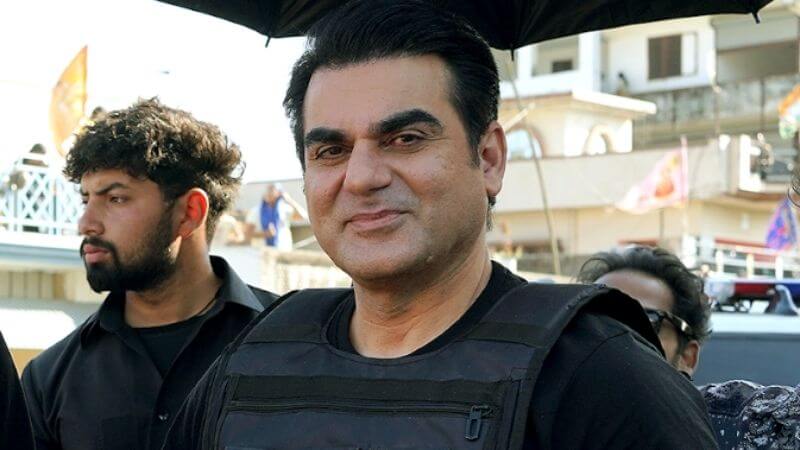
Daisy Shah has a limited but satisfactory role, providing emotional support within the narrative. Arbaaz Khan appears comfortable as the IB chief, bringing calm authority to the screen.
Supporting actors strengthen the film considerably. Rahul Dev is effective as Brigadier Bashir from POK, maintaining a menacing presence. Raza Murad adds gravitas in a ministerial role, while Yukti Kapoor and Mir Sarwar lend credibility to the intelligence and antagonist arcs.
Veteran performers like Hiten Tejwani and others ensure the ensemble remains balanced. No performance feels out of place, and the collective effort adds to the film’s authenticity.
Final Verdict

Bihu Attack is a sincere and thoughtful film that deserves credit for its intent. It goes beyond being a standard action thriller by attempting to address deeper issues of extremism, identity, and inclusion, particularly in the context of Northeast India. While the execution is uneven in places and the narrative occasionally predictable, the film’s honesty keeps it engaging.
Bihu Attack works best as a socially conscious thriller rather than a pure adrenaline rush. It reminds viewers that cultural pride and national unity are not contradictory, and that long-term peace requires more than force alone. For audiences interested in grounded patriotism and regional representation, this film is a decent watch.
Rating:  (3/5)
(3/5)
Stay tuned with Cinetales for more deep dives into the latest movies, series, OTT drops, and box office battles — all in one place!
Follow Us: Facebook | Instagram | X |
Youtube | Pinterest | Google News |
Cinetales is on YouTube; click here to subscribe for the latest videos and updates.