

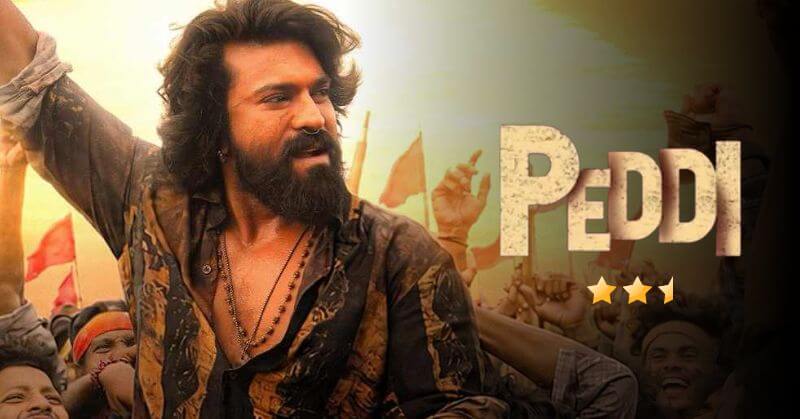

Sports dramas have always occupied a special place in Indian cinema. When combined with emotions, social issues, and an underdog story, they often create a winning formula. Director Buchi Babu Sana attempts something similar with Peddi, starring Ram Charan in the lead role. However, the film is not merely about sports. It also explores identity, dignity, recognition, and the struggles of a forgotten community.
Featuring Ram Charan, Janhvi Kapoor, Jagapathi Babu, Shivarajkumar, Divyendu, Boman Irani, Ravi Kishan, Tarak Ponnappa, and Upendra Limaye, Peddi arrives with massive expectations. The promotional campaign promised an emotional and inspirational journey powered by a strong social message.
While the film undoubtedly has its heart in the right place and benefits immensely from Ram Charan’s sincere performance, the execution often struggles to match the ambition. A powerful premise, emotional themes, and a committed lead actor are ultimately let down by uneven writing, excessive runtime, and a screenplay that loses focus too often.
More From CineTales



Peddi Story

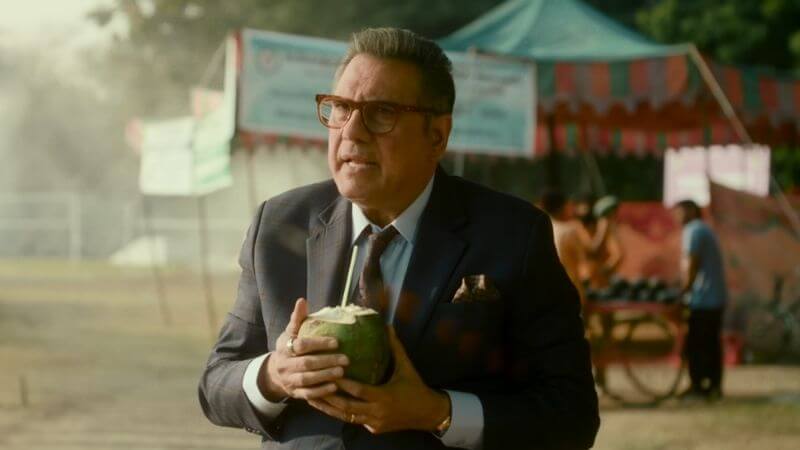
The story begins with a disappointing moment for Indian sports in 2016. The setback inspires a government official, played by Boman Irani, to search for sporting talent from rural India. This journey leads him to a remote village hidden in the hills of Vizianagaram. The village exists physically but remains absent from official government records. Its residents lack identity cards, voting rights, and access to basic public facilities. They are essentially invisible to the system.
At the center of this forgotten world is Peddi, played by Ram Charan. He works in a jaggery factory and supplements his income by participating in local cricket tournaments. Despite his cheerful nature, he carries the frustrations and struggles of an entire community. For years, village elder Appalasuri has been fighting for a railway station that could connect the village to the rest of the world. Unfortunately, every plea falls on deaf ears.
A devastating tragedy changes everything. The incident pushes Peddi into action. What starts as a demand for a railway station slowly transforms into a larger movement for recognition, dignity, and justice. As the battle intensifies, Peddi emerges as the voice of the voiceless.
His journey takes him through cricket grounds, wrestling arenas, athletic competitions, and political battles. Along the way, he discovers that the fight is not merely about infrastructure but about proving that his people deserve to exist in the eyes of the nation. Whether Peddi succeeds in changing the destiny of his village forms the crux of the story.
Peddi Review
Buchi Babu Sana deserves credit for choosing a story that goes beyond conventional sports drama formulas. At its core, Peddi is about identity and belonging. The social message is powerful, and the emotional foundation is genuinely moving. Unfortunately, the film struggles with consistency. The biggest issue lies in the screenplay. The first half spends too much time moving away from the central conflict. Several commercial elements are inserted into the narrative, often disrupting the emotional momentum. Romance tracks, unnecessary detours, and forced commercial moments slow the film considerably.
As a result, the narrative takes far too long to establish urgency. The film starts finding its footing only in the latter portions. Once the focus shifts back to the village’s struggle and Peddi’s larger mission, the storytelling becomes significantly more engaging.
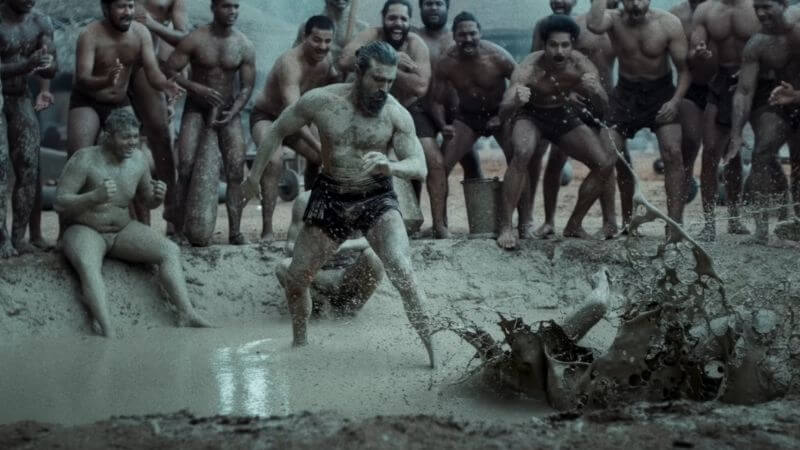
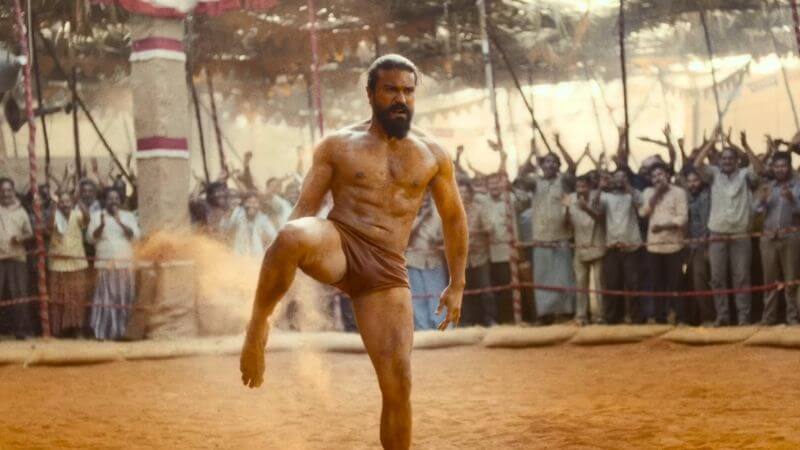
The wrestling sequences are particularly effective. These moments bring energy, emotion, and purpose to the narrative. More importantly, they remind viewers of what the film could have been had it maintained similar focus throughout. The final thirty minutes emerge as the strongest part of the film. The emotional payoff works, and the social message finally lands with the impact it deserves.
However, getting there requires patience. One major issue is the excessive focus on Ram Charan’s character. While he is undoubtedly the protagonist, the film becomes almost entirely dependent on him. Every conflict, emotional beat, and major development revolves around Peddi.
As a result, several supporting characters feel underdeveloped. For a film that runs over three hours, this becomes a noticeable problem. Many talented actors enter the narrative with promise but are eventually pushed to the sidelines.
Janhvi Kapoor’s character suffers the most. Apart from songs and a handful of scenes, she contributes very little to the overall narrative. Her character disappears for large portions of the second half, making her presence feel largely ornamental.
The screenplay also misses opportunities to explore the village community more deeply. The audience understands their suffering, but the film rarely spends enough time building memorable individual stories within the community. Technically, the film remains respectable.
The cinematography beautifully captures the rural landscape and adds visual richness to the story. The sporting sequences are staged effectively, particularly the wrestling portions. The production design helps create an authentic rural atmosphere, and the scale of several sequences is impressive.
AR Rahman’s music, however, turns out to be a disappointment. Given his legendary reputation, expectations were naturally high. While the songs gained popularity before release, they do not leave a lasting impact within the film itself. Most of the songs work primarily because of Ram Charan’s energetic screen presence rather than the compositions alone.
The background score is serviceable but never reaches the emotional heights required by the narrative. The editing could have been far tighter. A significant amount of material could have been trimmed, particularly in the first half. The excessive runtime becomes one of the film’s biggest obstacles.
Peddi Performances

Ram Charan is unquestionably the soul of the film. His commitment is visible in every scene. Whether it is the physical transformation, emotional intensity, or sporting sequences, the actor gives everything to the role.
What stands out most is his sincerity. Even when the screenplay loses direction, Ram Charan remains invested in the character. Several emotional scenes work solely because of his conviction. He successfully portrays both the vulnerability and determination required for Peddi.
This is clearly a performance-driven role, and Ram Charan deserves appreciation for embracing a character-focused narrative rather than relying solely on star power.
Janhvi Kapoor gets very little material to work with. She looks good on screen and performs her limited scenes competently, but the writing does not allow her character to leave any meaningful impact.
Boman Irani brings sincerity to his role, though certain portions feel slightly awkward because of language limitations. Shivarajkumar delivers one of the film’s strongest supporting performances. His portrayal of Gourinaidu brings dignity and emotional weight to the story. Whenever he appears on screen, the narrative benefits from his presence.
Jagapathi Babu performs adequately but occasionally leans towards exaggeration. A more restrained approach might have made the character more effective. Divyendu remains severely underutilized. The same can be said for several other capable actors including Rao Ramesh and Ravi Kishan, who deserved far more substantial roles.
Final Verdict
Peddi is a film with admirable intentions and a genuinely powerful core idea. The story of a forgotten village fighting for recognition has emotional strength and social relevance. Unfortunately, the execution often struggles to do justice to the material.
The excessive runtime, uneven screenplay, underwritten supporting characters, and unnecessary diversions prevent the film from becoming the impactful sports drama it aspires to be. Still, Ram Charan’s performance remains a major positive. His sincerity, transformation, and emotional commitment carry the film through its weaker moments. The final act also delivers enough emotional payoff to leave a positive impression.
For Ram Charan fans, Peddi offers enough moments to celebrate. For general audiences, however, the film remains a missed opportunity that never fully realizes its considerable potential.
Rating: ⭐⭐ ½ (2.5/5)
Love honest, hype-free movie reviews? Stay tuned with Cinetales for more deep dives into the latest movies, series, OTT drops, and box office battles — all in one place!
Follow Us: Facebook | Instagram | X |
Youtube | Pinterest | Google News |
Cinetales is on YouTube; click here to subscribe for the latest videos and updates.